Electric Scooter UK Legal: What Buyers Need to Know in 2026
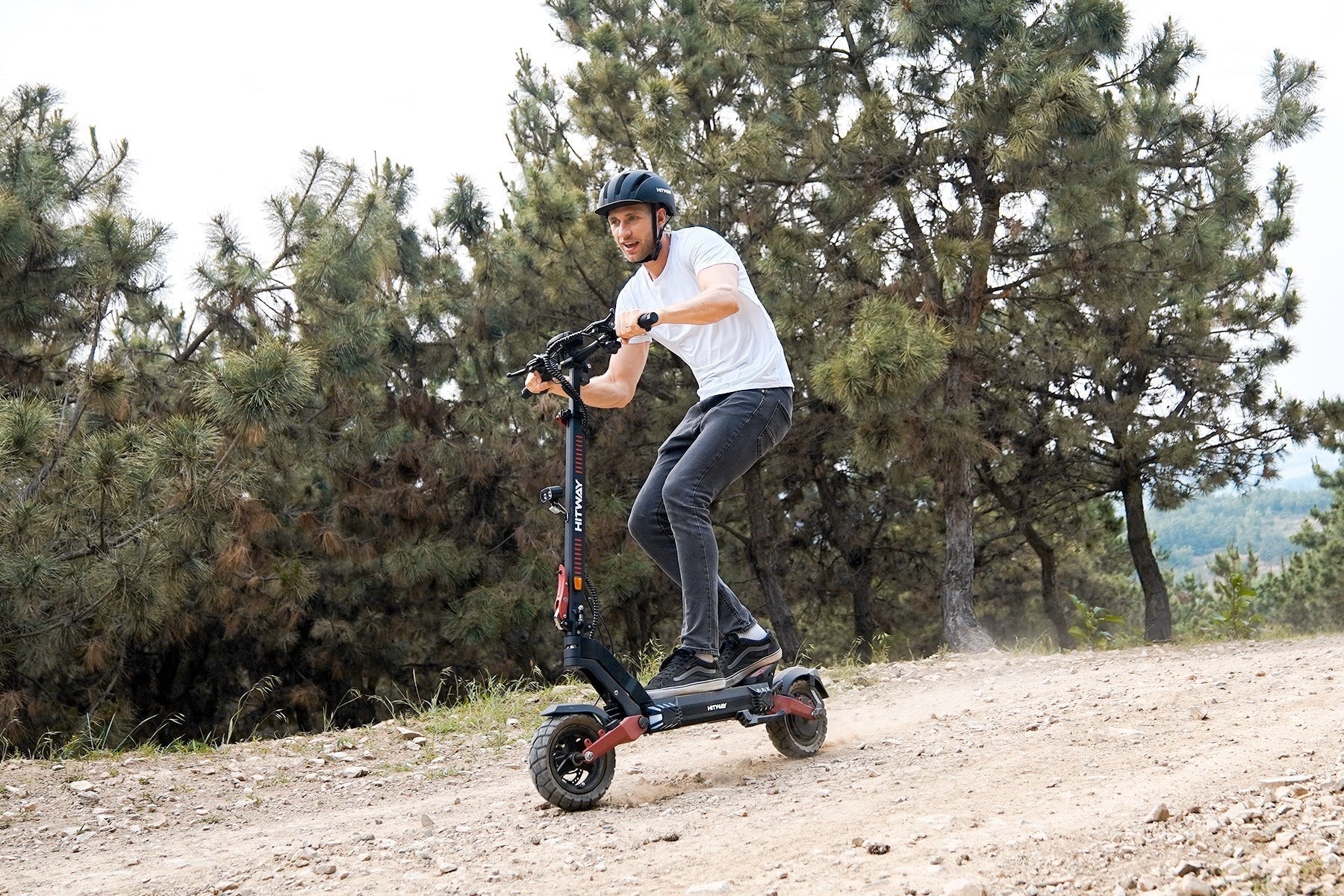
If you want to buy an electric scooter in the UK, the first thing to get straight is that buying one is legal while riding it in public is not. A private e-scooter can be sold and owned freely, but it may only be used on private land with the landowner's permission — or, in public, only as a government-approved rental trial scooter. This guide is written for buyers: where you can legally ride, how the rental trials work, what the law may do next, and a checklist to run through before you pay.
Legal to buy, not legal to ride in public
Start with the split that trips up most buyers. Selling and buying e-scooters is legal in the UK. There is a large market, and retailers operate openly. What you cannot do is ride a privately owned e-scooter on a public road, a cycle lane, a pavement, or in a public park.
The reason is the vehicle category. An e-scooter with a motor is treated as a motor vehicle and a powered transporter, which would need insurance, DVLA registration, vehicle tax, a licensed rider and compliance with manufacturing standards. A private e-scooter cannot meet those requirements, so it cannot legally be used in public. Legal to own, illegal to ride in public — that is the whole of the rule, and no specification on the box changes it.
Where you can legally use an e-scooter in the UK
For a privately owned e-scooter, lawful use means private land with the landowner's permission. Typical settings include:
- your own garden or driveway
- a farm or smallholding
- a campsite that permits them
- an enclosed private track or practice area
- a private estate or field
What unites these is clear ownership or permission and no public access. A public park, a towpath, a shared path or a quiet lane are all public and therefore off limits, however empty they look. Grass, gravel and tarmac on your own land are fine; the same surfaces in public are not.
Two grey areas are worth naming. A shared-use path is still public, so a privately owned scooter cannot use it, whatever the surface. And permission is what counts: land you do not own but have permission to use counts as private land, while land you own but that the public can freely cross may not. When in doubt, treat it as public and leave the scooter at home.
One more caution for buyers. Several models carry a German ABE (Straßenzulassung). That is a German road-approval certificate and does not make a scooter legal in the UK. It says something about build and type approval; it is not a British permission to ride. Do not let the letters ABE stand in for "road legal here".
How the rental trials work
If you want the public-road experience legally, the only route is a government-approved rental trial. The trials started in July 2020 and have been extended to May 2028 — the fifth extension — so the framework is here to stay for now.
To use a trial scooter you must be 18 or over and hold a full or provisional UK driving licence with the correct entitlement. You can ride on roads in the trial area (not motorways) and in cycle lanes, but not on pavements. Trial scooters are limited to 15.5 mph, and third-party insurance comes from the operator.
On 7 July 2026 the Department for Transport updated the trial areas, adding Brighton and Hove, Cornwall and Plymouth, and removing Newcastle. Check the current list before you plan a ride, because coverage changes and a trial scooter is only lawful inside its area.
Renting is also the cheapest way to find out whether scooter riding suits you. You sign up with an operator, verify your licence and age, and pay per ride or by a pass, while the scooter, the insurance and the maintenance stay the operator's problem. If you later buy your own machine, none of that cover comes with it.
What comes next: the 2026 legislative picture
Buyers often ask whether private e-scooters will soon be legalised. So far, no.
In February 2026, Parliament saw the E-scooters (Review and Awareness) Bill, a private member's bill calling for a formal review of the rules and better public awareness. It has not passed. The government has said it will bring forward micromobility legislation and consult on regulating private e-scooters when parliamentary time allows, but nothing is in force yet.
Treat any promise of "coming soon" legality as unconfirmed. Until the law actually changes, the position stays as described here — and a purchase should be planned around today's rules, not tomorrow's headlines.
For context on why the rules matter, there are around one million privately owned e-scooters in the UK, and the Motor Insurers' Bureau reported nearly £47 million in micromobility-related payouts in 2025. Those figures describe a large, largely uninsured fleet — and they form the backdrop to any future reform.
Before you buy: a checklist
Run through these questions before you pay:
| Question | Why it matters |
|---|---|
| Will you only use it on private land? | Private land with permission is the only lawful use for a scooter you own. |
| Do you want to commute on public roads? | If yes, an e-scooter is not the legal tool — look at a 250W e-bike instead. |
| What is the motor power and unlocked speed? | Higher power and unlocked speeds do not change UK legality; they are for private and off-road use. |
| Is the only certification a German ABE? | An ABE is not UK legality. Do not read it as permission to ride here. |
| Does the seller state the UK restrictions clearly? | A seller who is honest about the public-road ban is one you can trust. |
| Is the battery and range right for your use? | Match the machine to garden, farm or track use, not to a public commute. |
If your honest answer to the second question is "I want to ride on the road", stop and look at e-bikes instead.
If you actually want to commute legally
For a legal commute, a compliant e-bike is the practical choice. An EAPC (Electrically Assisted Pedal Cycle) counts as a bicycle in law if it has working pedals, a motor rated at no more than 250W, assistance that cuts out at 15.5 mph (25 km/h), and a rider aged 14 or over. No licence, no DVLA registration, no vehicle tax, no insurance and no MOT are required. A 250W model such as the HITWAY BK15 Plus 29-inch electric bike is built for exactly that.
If your riding really is confined to private land, the HITWAY H9 Pro is a scooter to consider for that setting, and the HITWAY H10 1600W e-scooter suits larger private or off-road spaces. You can browse the full e-scooter range to compare models, but keep the public-road rule in view throughout.
The bottom line
Buying an electric scooter in the UK is legal; riding a private one in public is not. Your lawful options are private land with permission, or a government-approved rental trial scooter. Before you buy, confirm which of the two applies to you, check the power and unlocked speed, and remember that a German ABE is not UK road legality. If you want to travel on public roads, choose a 250W e-bike such as the HITWAY BK15 Plus. For the wider picture, read our guides on whether an electric scooter is legal in the UK and whether you need a licence for one.
This article is general information about UK law, not legal advice — check GOV.UK for the current position before you ride.


