Electric Bike, Scooter and Moped UK Law: Licence, Legality and Price Guide
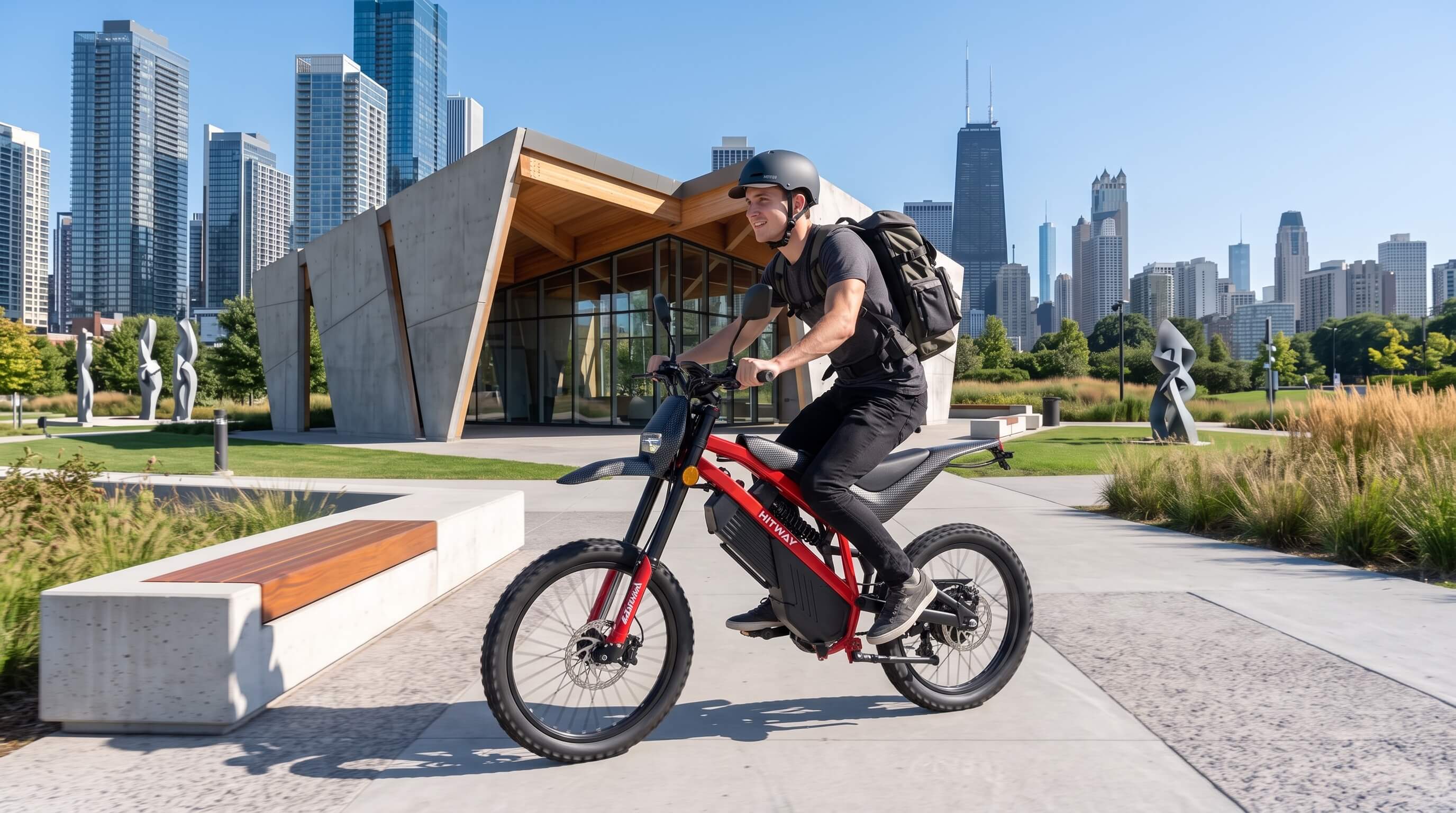
Three vehicles that look almost identical sit in three completely different legal boxes in the UK. A compliant electric bike needs no licence, no registration, no vehicle tax and no insurance. A privately owned electric scooter cannot legally be used on a public road at all. An electric moped needs a licence, registration, tax, insurance and an approved helmet before it turns a wheel.
Mixing those three up is the most expensive mistake in this corner of the market, and it is usually the seller's fault rather than the buyer's. This guide answers the licence, legality and price questions for all three vehicles in one place, and shows you how to tell which one you are actually buying.
The two-minute answer
| Vehicle | Legal on UK public roads? | Licence needed? | Minimum age |
|---|---|---|---|
| Electric bike (EAPC: 250W, 15.5 mph, pedals) | Yes | None at all | 14 |
| Electric scooter, privately owned | No - private land only | Not applicable, use is not permitted | - |
| Electric scooter, rental trial | Yes, inside trial areas | Full or provisional UK driving licence | 18 |
| Electric moped (up to 4kW, 28 mph) | Yes, once registered and insured | AM licence | 16 |
Everything below explains how each answer is reached, what it costs, and which models are genuinely built for UK roads.
What is an e-bike?
A legal electric bike in the UK is an EAPC - an Electrically Assisted Pedal Cycle. The law treats it as an ordinary pedal cycle, which is why so much of the paperwork simply disappears.
The motor assists your pedalling rather than replacing it. Power comes either from a rear hub motor, which is simpler and cheaper and suits flat commutes, or a mid-drive motor, which drives through the gears and handles hills and heavier loads better. A torque sensor reads how hard you push and responds proportionally; a cadence sensor only detects that the pedals are turning, so it feels more like an on/off switch.
Batteries are rated in watt-hours (Wh) - volts multiplied by amp-hours. A 48V 15Ah pack is 720Wh, enough for a long day out. A 36V 10Ah pack is 360Wh and suits short urban trips. Assist levels let you trade range against speed.
That is the hardware. The legal position is narrower, and it is what actually decides whether you need a licence.
| E-bike (EAPC) | E-scooter (private) | Electric moped | |
|---|---|---|---|
| Public roads in the UK | Yes | No | Yes, when registered and insured |
| Licence | None | Use is not permitted | AM |
| Minimum age | 14 | - | 16 |
| Motor | 250W or less | Any | 4kW or less |
| Assisted speed | Cuts out at 15.5 mph | - | 28 mph design limit |
| Tax and insurance | None required | - | VED plus third-party insurance |
| Helmet | Not required | - | Approved motorcycle helmet |
Do you need a licence for an electric bike?
No. A UK-legal electric bike requires no driving licence of any kind - not a provisional, not a full car licence. You do not need CBT, DVLA registration, vehicle tax, insurance or an MOT.
That exemption is conditional on four things:
- It has pedals that can drive it forward.
- Maximum continuous rated motor power is 250W or less.
- Assistance cuts out at 15.5 mph (25 km/h).
- The rider is 14 or over.
Two details catch people out. Walk-assist must cut off at 3.7 mph (6 km/h). And a bike that can move on throttle power alone is not legal on UK roads unless it was sold before 1 January 2016 or carries full vehicle type approval.
Miss any one of the four and the bike becomes a moped or motorcycle in law: licence, registration, insurance, tax, an approved helmet and type approval all apply. Riders regularly discover this after buying online from a listing that claimed to be road legal.
If you want the simplest possible route, the BK5S folding e-bike is 250W, pedal-assist only, with no throttle, so it clears all four conditions. The BK15 Pro 27.5-inch commuter e-bike does the same job for longer rides at 60-100 km per charge.
Is an electric scooter legal in the UK?
A privately owned electric scooter is illegal on UK public roads, cycle lanes, pavements and in parks. It can only be used on private land with the landowner's permission.
The reason is not a scooter-specific ban. It is classification. The law treats an e-scooter as a motor vehicle - a powered transporter - which means it needs insurance, registration, vehicle tax, a licence and compliance with vehicle construction standards. A privately owned scooter can satisfy none of those, so there is no legal way to use it in any public space.
Buying and selling one is not illegal. Using it in public is.
The only legal way to ride an e-scooter in public in the UK is a government-approved rental trial. Those trials have been extended again and are now scheduled to run until May 2028. Rental machines are capped at 15.5 mph, must stay off pavements and motorways, and the operator carries the third-party insurance. The Department for Transport updated the trial area list on 7 July 2026, adding Brighton and Hove, Cornwall and Plymouth, and removing Newcastle.
Reform is in the air but nothing is settled. In February 2026 an MP introduced the E-scooters (Review and Awareness) Bill, which would require the government to formally review the rules. It has not passed. Ministers have said they will legislate on micromobility when parliamentary time allows and will consult on regulating private e-scooters, but as things stand nothing has changed.
Enforcement is real. Riding a private e-scooter in public can mean a fine, penalty points and the police seizing the machine. With around one million privately owned e-scooters in the UK and close to £47 million paid out on micromobility claims by the Motor Insurers' Bureau in 2025, this is not a theoretical risk.
HITWAY's e-scooters carry German ABE (Straßenzulassung) approval. That is a German type approval and does not make them legal in the UK. In the UK they are built for private land and off-road use. See the full HITWAY e-scooter range.
Do you need a licence for an electric scooter?
For a privately owned e-scooter, the licence question does not arise. You cannot use it on a public road, so there is nothing to licence.
For a rental trial scooter, yes: you must be 18 or over and hold a full or provisional UK driving licence with the right entitlement. The operator's insurance covers you, and the vehicle is capped at 15.5 mph.
Compare that with an e-bike, which needs no licence of any kind and can be ridden from the age of 14. If your goal is to get around without adding any licence paperwork, an e-bike is the only one of the three that clears that bar.
If you are shopping for a machine to use on private land, the H10 and H11 are built as performance scooters for exactly that - they are not UK road vehicles and are not sold as such.
What is the fastest electric scooter?
There are two honest answers, and the gap between them is the whole story.
On UK public roads, the fastest you can legally ride an e-scooter is a rental trial machine at 15.5 mph (25 km/h). No privately owned e-scooter is legal on a public road at any speed.
On private land, the ceiling is set by the machine. The H10 and H11 are rated at 500W per motor with peak output of 1600W per motor, with speed modes at 10, 15 and 25 km/h and a page-listed unlocked top speed of 50 km/h. Range is 90-100 km, tyres are 10x3-inch tubeless, and the H10 weighs 33.5 kg.
That 50 km/h figure deserves to be read carefully. Speed is never a single number. It depends on the difference between rated and peak motor power, controller current, rider weight, gradient, battery charge and tyres. A scooter that reaches 50 km/h on a fresh battery on the flat will not do it uphill at 20% charge.
Top speed is also not the most important specification. Brakes, suspension, tyre grip, water resistance and range matter far more to how a machine actually feels and how long it lasts. A scooter with an honest 25 km/h and good brakes is more useful than a number on a specification sheet.
Do you need a licence for an electric moped?
Yes. An electric moped needs an AM licence, and the minimum age is 16.
In UK law a moped has a maximum design speed of 45 km/h (28 mph) and either an engine of 50cc or less or a motor of 4kW or less. Electric mopeds sit in the AM category. A motor above 4kW moves you into a higher licence category - A1 at 17, A2 at 19, and A at 21 or 24 depending on the route you take.
Getting the licence means working through a set sequence:
- Provisional licence: £34 online (£43 by post). You can apply from 15 years and 9 months, but you must be 16 to ride on the road.
- CBT (Compulsory Basic Training): a one-day course costing £130-£190. Pass and you receive a DL196 certificate, which lets you ride with L plates. It is valid for two years, and if you have not gained a full licence by then, you retake it.
- Motorcycle theory test: £23.
- Module 1, off-road manoeuvres: £15.50.
- Module 2, on-road: £75 on weekdays, £88.50 at weekends.
A full AM entitlement typically costs £275-£400 or more before you buy the vehicle or insure it.
On top of the licence you need DVLA registration and a number plate, vehicle tax (VED, cheapest band), at least third-party insurance and an approved motorcycle helmet. As a learner you must display L plates front and rear, carry no passengers and stay off motorways.
One exception is worth knowing. If you passed your car driving test before 1 February 2001, you can ride a 50cc moped without L plates and without CBT, though taking the CBT anyway is sensible. Passed on or after that date? CBT comes first. Once you have completed CBT, the AM entitlement runs with your car licence and is not tied to the two-year learner limit.
Riding without a licence or without insurance is an offence in its own right, and holding a car licence does not make an unregistered or uninsured moped legal.
Making an electric moped road legal in the UK
An electric moped is road legal once it meets the same requirements as any other moped: it holds type approval, it is registered with the DVLA and carries a plate, vehicle tax is paid, at least third-party insurance is in place, and the rider holds the right licence and wears an approved helmet.
Electric mopeds sit in the AM category, up to 4kW with a design speed of 28 mph. If a machine exceeds those limits it is no longer a moped, and both the licence you need and the tax and insurance position change with it.
The practical point for buyers is that an electric moped is a motor vehicle from the first day, with all the running costs that implies. If what you actually want is to skip the licence, registration, tax and insurance entirely, that is precisely what a 250W e-bike is for.
How much is an electric bike - and how much is an electric moped?
An electric bike in the UK generally costs between £500 and £2,000, and the market splits into three bands:
| Band | Typical price | What you get |
|---|---|---|
| Entry | £500-£800 | Basic hub motor, 360-500Wh battery, short urban range |
| Mid-range | £800-£1,500 | Larger batteries, better brakes, folding or 27.5-29 inch frames |
| Premium | £2,000+ | Mid-drive motors, high-capacity batteries, branded components |
HITWAY's UK range lists between £599.99 and £1,699.99. Concrete examples:
- BK5S 16-inch folding - £599.99, 250W, 35-70 km
- BK15 Pro 27.5-inch - £699.99, 250W, 60-100 km, Shimano 7-speed
- BK8SL 27.5-inch - £899.99
- BK7S Plus 29-inch - £999.99
- BK15 Plus 29-inch - £1,199.99, 250W 70Nm, 80-150 km
- BK9S 26x4.0 fat-tyre e-bike - £1,299.99, 250W 70Nm, 720Wh
What decides the price is motor type (hub versus mid-drive), battery capacity in watt-hours and cell quality, frame material, brakes and gearing, the folding mechanism, and the quality of after-sales support. That last point is not marketing - a battery replacement is the single largest long-term cost on any e-bike, which is why it is worth checking the warranty terms before you buy on price alone.
Electric mopeds cost more. A used 50cc moped often sells for under £1,000 (AutoTrader), and a new entry-level petrol moped is around £2,000 - a Keeway Fact X 50cc is about £1,799 (MoneySuperMarket). Electric mopeds generally cost more than petrol equivalents, and on top you have the licence costs above, insurance, tax, a helmet and registration.
The ownership picture over time looks like this:
| Ongoing cost | 250W e-bike | Electric moped |
|---|---|---|
| Licence | None | AM, around £275-£400+ |
| Registration and plate | No | Yes |
| Vehicle tax | No | Yes, lowest band |
| Insurance | Not required | Third party at minimum |
| Helmet | Not required | Approved motorcycle helmet |
| Minimum age | 14 | 16 |
Which one should you buy?
| Your goal | Best fit | Why |
|---|---|---|
| Commute legally with no paperwork | 250W e-bike | No licence, tax, insurance or registration, and legal from 14 |
| Long commute or hilly route | BK15 Plus 29-inch or BK9S | 70Nm torque and 80-150 km range |
| Private-land or off-road riding | H10 e-scooter | A performance machine, not a UK road vehicle |
| Public roads with a motor above 250W | Electric moped | Legal once registered, taxed and insured under an AM licence |
Related guides in this series
- Is an electric scooter legal in the UK?
- Do you need a licence for an electric bike?
- Do you need a licence for an electric scooter?
- How much is an electric bike?
- What is an e-bike?
- Electric scooter UK legal: buying guide
- What is the fastest electric scooter?
- Do you need a licence for an electric moped?
- How much is an electric moped?
- Do you need a licence to drive an electric moped?
The bottom line
The licence question has three different answers in the UK and they are not interchangeable. A 250W e-bike needs no licence, no registration, no tax and no insurance. A private e-scooter cannot legally be used on public roads at all, and the only public option is a rental trial scooter, for riders aged 18 or over with a UK driving licence. An electric moped is a motor vehicle from day one: AM licence, registration, tax, insurance and an approved helmet.
If you want to ride to work this week without adding any of that, browse the full HITWAY UK e-bike range - 250W, pedal assist only, with assistance cutting out at 15.5 mph. If you are after a performance machine for private land, the HITWAY e-scooter range is built for exactly that.
This article is general information about UK law, not legal advice - check GOV.UK for the current position before you ride.


